
 + 86 18721624519
Solenergi for telekomtårn: En praktisk design- og investeringsguide
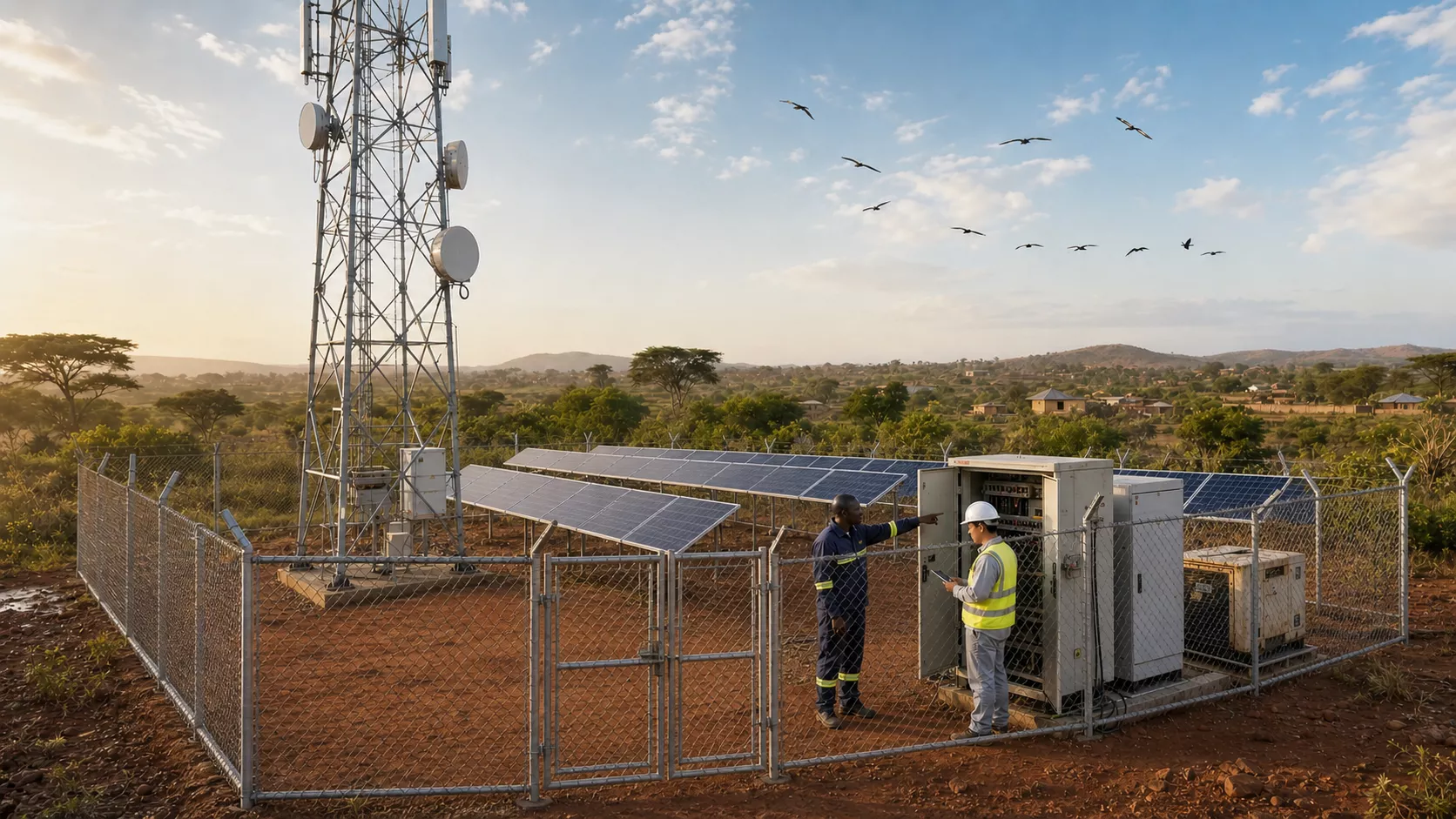
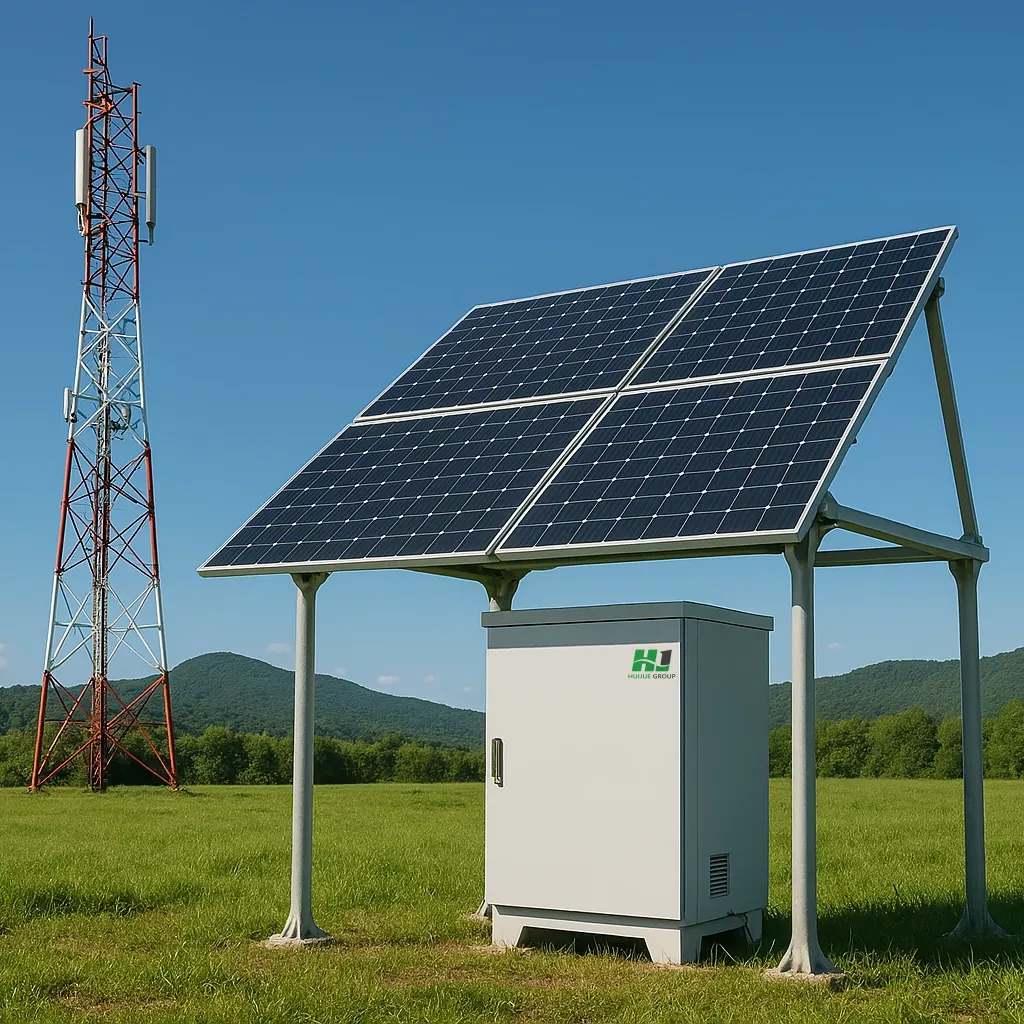
Solar power for telecom towers can reduce generator runtime and improve energy independence, but panels alone do not make a reliable telecom power system. The design has to match the site’s measured load, worst-season solar resource, autonomy target, DC voltage window, battery limits and recovery requirement. In many locations, the best answer is a managed hybrid rather than a generator-free site.
On a first site review, I separate what can be calculated from what still has to be measured. Daily energy and a provisional PV size can be screened early. Battery current, thermal behaviour, low-sun recovery and the final protection design still need site data and product curves. That distinction keeps an early estimate from quietly turning into a purchase specification.
Why telecom solar is different from ordinary commercial PV
A commercial rooftop normally uses the grid as an energy buffer. An off-grid base station does not have that luxury. If the design solar month delivers less energy than expected, the battery state of charge falls day after day until the load is disconnected or a backup source starts.
Telecom loads also have their own shape. A radio site may have a steady base demand, traffic-related variation, short power peaks and a cooling load that follows ambient temperature. Microwave links, obstruction lights, surveillance, access control and cabinet heaters add smaller loads that are easy to miss. Future radio additions can be more important than a few percentage points of conversion efficiency.
Then there is the DC interface. Many telecom systems operate on a nominal -48 V DC bus. Where the architecture allows it, PV can charge the battery and serve DC loads through an MPPT controller and DC power system without an unnecessary DC-to-AC-to-DC conversion. An inverter is still needed for AC loads, but it should not be added by habit.
Choose the operating architecture before sizing components
Site classification comes first. Grid quality, fuel access, available land, solar resource and outage consequences determine which architecture deserves detailed modelling.
| arkitektur | Where it usually fits | Hovedfordel | Risiko for kontroll |
|---|---|---|---|
| Grid-assisted solar | Reliable or moderately weak grid with useful daytime solar | Reduces imported energy without requiring long off-grid autonomy | Export rules, transfer behaviour and whether solar remains available during an outage |
| PV plus battery | Remote site with good solar resource and a manageable, well-defined load | Eliminates routine fuel logistics | Consecutive low-sun days and slow recovery after deep discharge |
| PV, battery and diesel | Critical off-grid or very weak-grid site | Solar cuts runtime while the generator covers exceptional energy deficits | Poor start logic, inefficient generator loading and neglected maintenance |
| PV, battery and grid with generator reserve | High-availability site with unreliable utility supply | Multiple energy paths and flexible operating policy | Control complexity and unclear source priority |
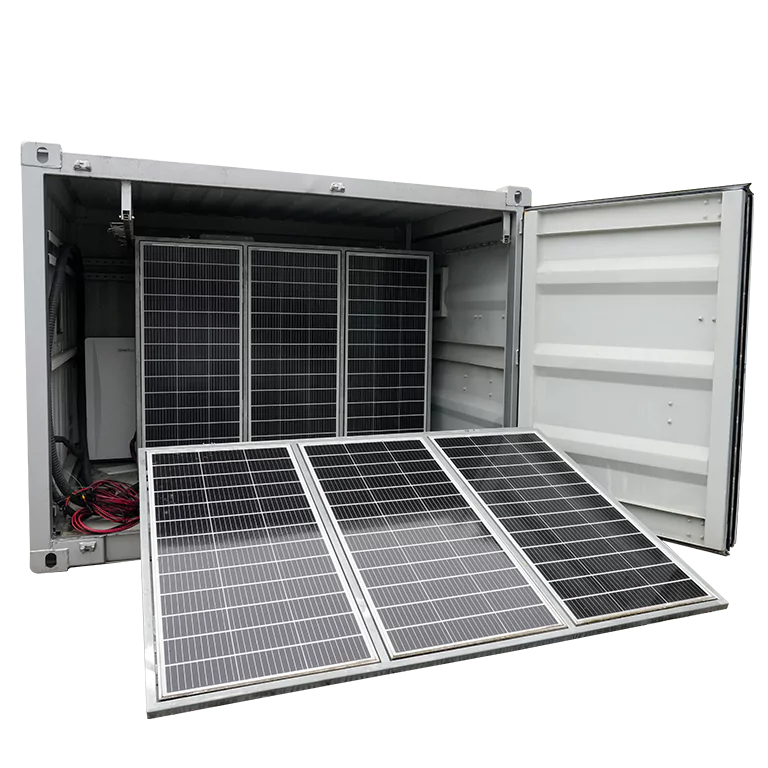
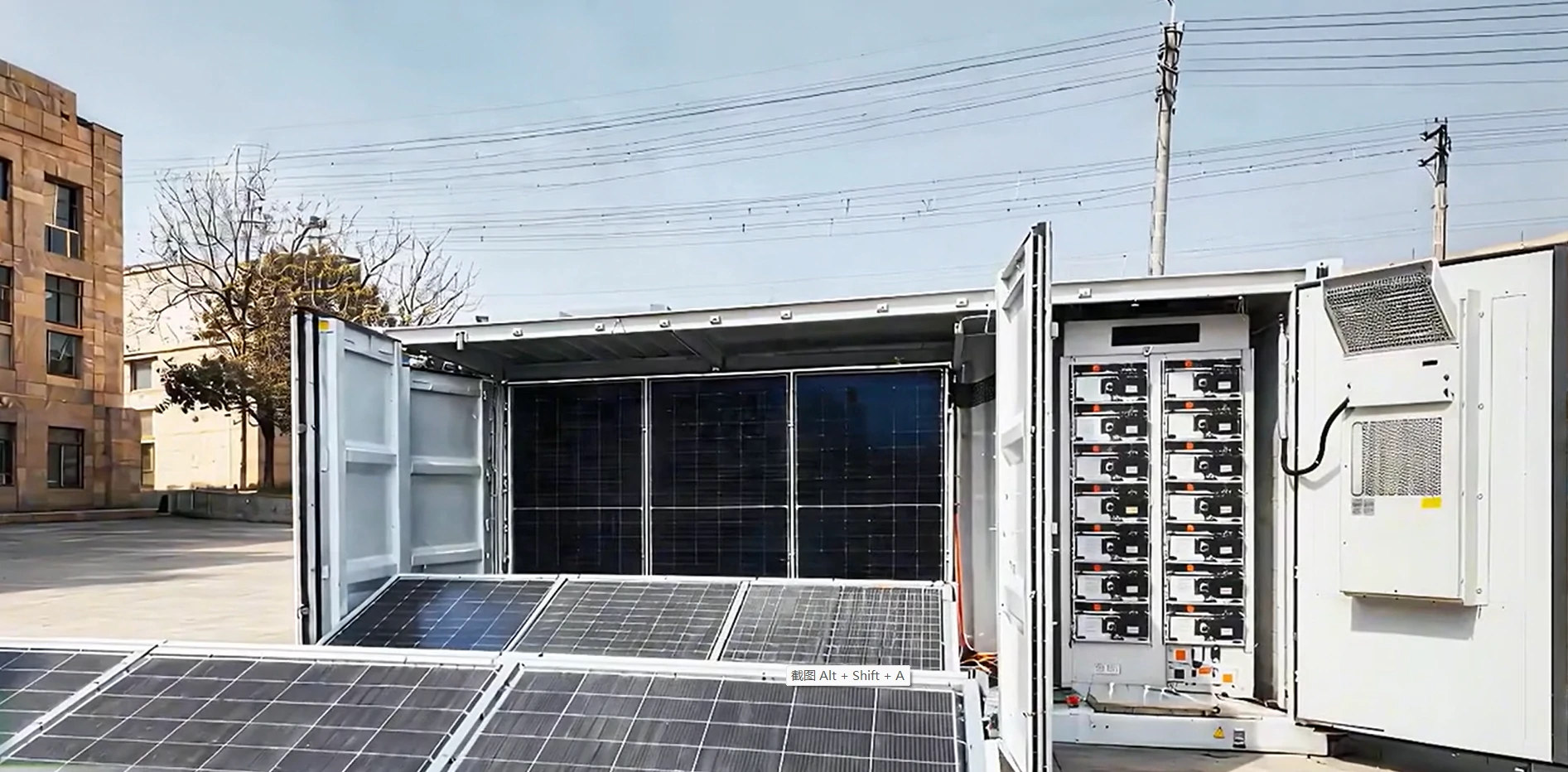
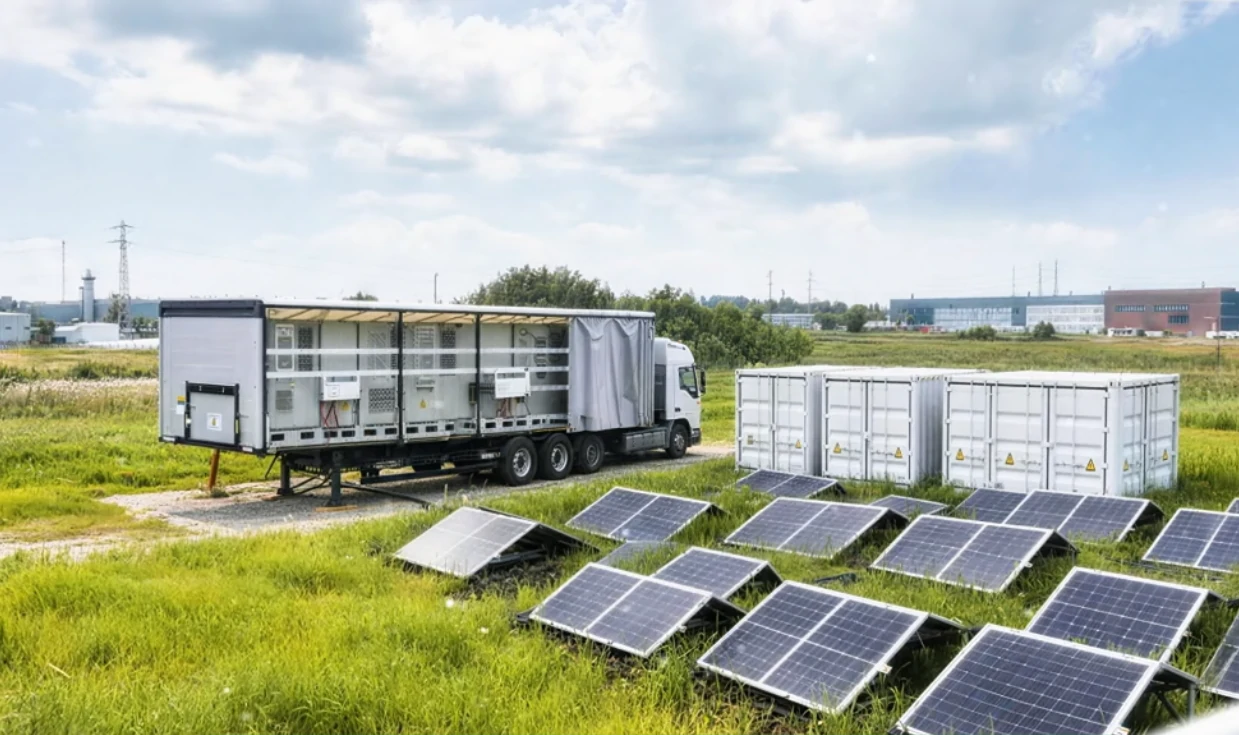
| Deployable or containerized system | Emergency network, temporary coverage or remote construction | Factory integration and faster field deployment | Transport limits, anchoring, access and site-specific solar exposure |
A pure solar configuration can look attractive in a spreadsheet because it removes fuel. Yet a modest standby generator may be cheaper than installing enough PV and battery capacity to cover a rare multi-day weather event. Conversely, an oversized generator that runs lightly for long periods can waste fuel and suffer avoidable maintenance problems. I would not recommend removing the final backup source until an hourly model has survived the low-solar cases and the operator has accepted the remaining outage risk.
Start with measured load and design-period weather
At minimum, collect the site coordinates, hourly or 15-minute load, peak demand, DC and AC interfaces, outage history, generator records, cabinet temperature, available PV area and planned network expansion. Three records are particularly revealing: the load trace, generator run hours and delivered-fuel history. When they tell different stories, treat the energy baseline as provisional and find out why before sizing equipment.
If interval data is not available, build a schedule by subsystem instead of multiplying every nameplate rating by 24 hours. Mark each estimate as measured, calculated or assumed. That small discipline makes the next review much easier.
E_load = Σ(P_i × h_i)Daily energy is used to estimate PV and battery capacity. Peak power is checked separately because it determines controller, rectifier, inverter, cable, busbar and protection ratings. Both matter: a site with a low daily average can still produce a high short-duration current.
PV screening calculation
P_PV = E_source ÷ (PSH_design × K_PV)E_source is the energy that must be supplied at the selected system boundary. PSH_design is the peak-sun-hour value for the relevant low-solar month, not simply the annual average. K_PV accounts for PV-side losses such as temperature, dirt, mismatch, wiring, MPPT performance and shading.
Keep the loss boundaries visible. Rectifier and distribution losses belong in the downstream power path; module temperature and soiling belong on the PV side. If both are hidden inside one vague “safety factor,” they may be counted twice or missed entirely.
Battery screening calculation
C_bat = E_autonomy ÷ (DoD × η_path × F_EOL × F_temp)E_autonomy is the load energy required while the selected sources are unavailable. DoD is permitted depth of discharge, η_path is battery-to-load efficiency, F_EOL is the retained capacity required at end of life, and F_temp represents usable capacity at the design temperature. Do not apply a factor again if it is already included in the product’s declared usable energy.
A worked screening example
Consider a hypothetical remote site averaging 1.5 kW. Its delivered load is 36 kWh per day. Suppose downstream efficiency is 88% and the planning allowance is 10%; the source-side energy target is then about 45 kWh per day. With 4.0 design peak-sun hours and a PV derating factor of 0.78, the initial array is about 14.4 kWp.
Now assume the battery must carry the 1.5 kW load for 12 hours. That is 18 kWh delivered. At 80% allowable depth of discharge, 94% path efficiency and 80% end-of-life retention, the initial nameplate requirement is about 29.9 kWh before module rounding and temperature correction. A 24-hour autonomy requirement would approximately double that figure.
| Screening step | Beregning | Resultat |
|---|---|---|
| Daily delivered load | 1.5 kW × 24 h |
36.0 kWh/dag |
| Source energy target | 36 ÷ 0.88 × 1.10 |
45.0 kWh/dag |
| PV-array | 45 ÷ (4.0 × 0.78) |
14.4 kWp |
| 12-hour autonomy energy | 1.5 × 12 |
18.0 kWh delivered |
| Initial battery before temperature correction | 18 ÷ (0.80 × 0.94 × 0.80) |
29.9 kWh nominelt |
These numbers are not a quotation. They describe one set of assumptions, all of which are visible in the table. A final design must simulate hourly battery state of charge, consecutive poor-weather days, temperature, load growth and source outages. It must also round to compatible battery modules and verify current at the minimum operating voltage.
Recovery is the check people forget
After an outage or low-sun event, the telecom load continues while the battery recharges. In the example, restoring 18 kWh within six hours at 92% charging-path efficiency requires roughly 3.3 kW for charging. Add the continuing 1.5 kW site load and the available source must deliver at least 4.8 kW before other losses and headroom.
A battery can therefore be large enough for autonomy but paired with too little PV or rectifier capacity to recover before the next event. State-of-charge simulation should show both the lowest reserve and the time needed to restore it.
Component decisions that affect field reliability
PV placement and structure
Mounting modules directly on a tower may save ground space, but tower height does not automatically improve solar production. Antennas, steelwork, cables and nearby vegetation can cast complex shadows. Added wind area, structural loading, difficult cleaning and work-at-height access may outweigh the space saving. If a technician cannot safely clean or replace a module, its theoretical yield is not very useful. Ground-mounted arrays are often easier to orient, inspect and expand, provided the compound has secure, unshaded land.
Check wind, snow, corrosion, soil or foundation conditions and the cold-temperature string voltage. Vegetation control belongs in the maintenance plan; a row of panels that is clear at commissioning can be shaded a year later.
Batteri og BMS
Lithium iron phosphate is widely considered for telecom storage because of its cycle-life and thermal characteristics, but chemistry does not guarantee a good system. Review usable energy, continuous and peak current, low-temperature charge limits, high-temperature derating, BMS protection, cell or module balancing, communication fallback and warranty conditions.
Parallel batteries should have a validated current-sharing strategy, compatible firmware and individual branch protection. Before connection, state-of-charge differences must be controlled to avoid inrush or circulating current.
DC power path and hybrid controller
The controller decides when PV serves the load, charges the battery, starts the generator or uses the grid. Its priorities should reflect the service policy rather than a generic factory default. A critical reserve may need to be protected from routine fuel-saving cycles. Likewise, generator start and stop thresholds should prevent rapid cycling and allow an efficient charging block.
Confirm the full battery voltage range against the nominal -48 V telecom load, rectifier setpoints and low-voltage disconnect. For mixed AC and DC sites, map each conversion stage and its efficiency.
Cabinet and environmental protection
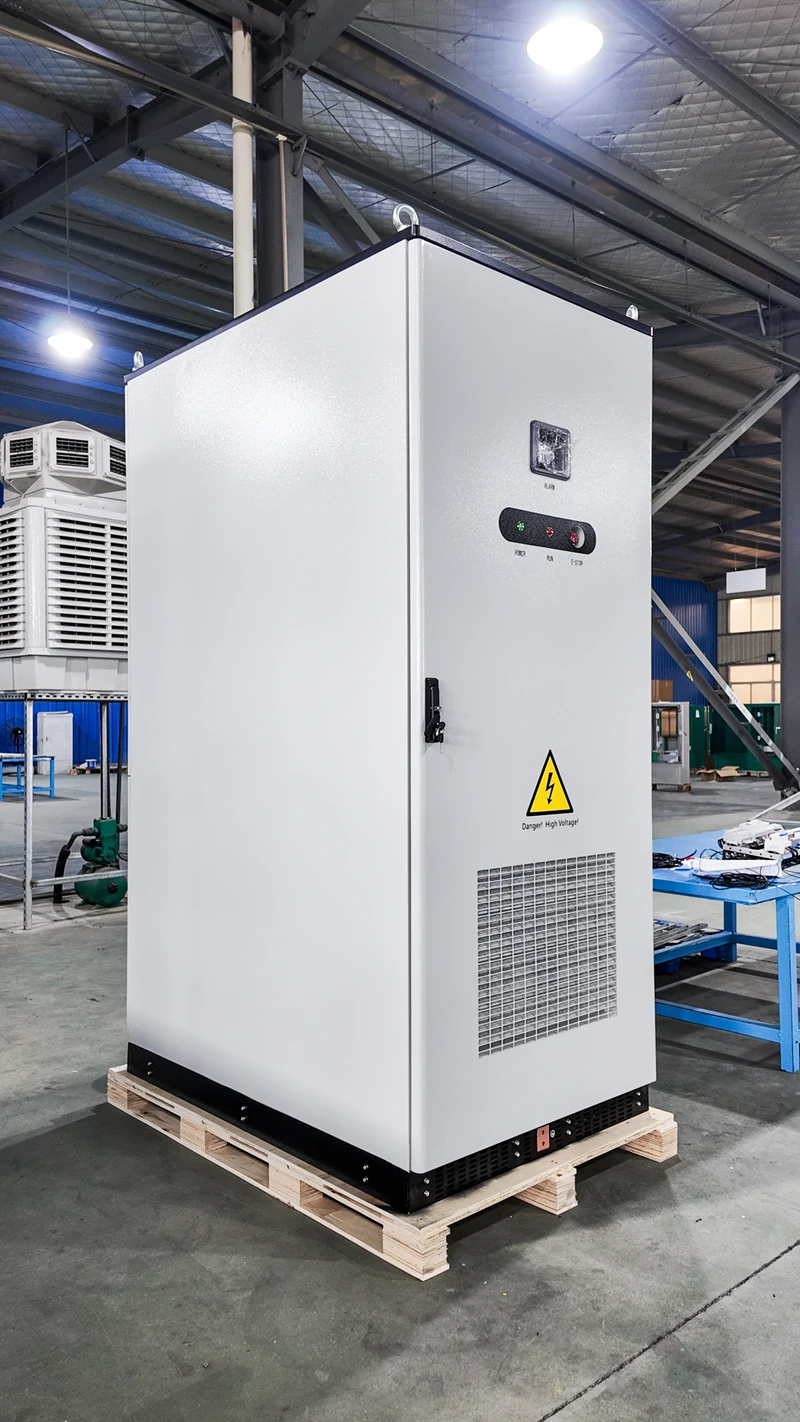
An outdoor enclosure needs more than a headline IP rating. Solar gain, condensation, salt, dust, insects, cable entries, drainage and internal heat can all affect long-term reliability. Temperature sensors should represent the battery modules and hot components, not only the air near an inlet.
Heating, ventilation and cooling consume energy, so include them in the load model. At hot sites, a cabinet that protects battery life may also raise daily energy demand. At cold sites, controlled heating may be required before charging is permitted.
Monitoring that leads to action
Useful remote data includes source energy, site load, battery state of charge, cell or module spread, temperature, generator starts, fuel level, protection events and communication health. A dashboard showing 100% state of charge is not proof that the battery can deliver its rated energy. Capacity tests, event history and trend data are more persuasive. Set alarm ownership and response times before handover, and make sure the local controller retains safe operation when the cloud or backhaul connection is unavailable.
For additional project-planning material focused specifically on telecom sites, buyers and engineering teams can consult these solar telecom power-system resources as a secondary reference when preparing their site questions.
Compare total lifecycle cost, not just panels versus diesel
Sunlight has no fuel invoice, but a solar telecom system still has capital, service and replacement costs. For diesel comparisons, use the delivered fuel price at the tower, not the national pump price. Road condition, distance, security and the size of each delivery can change the number substantially. The fair comparison is the discounted cost of delivering the required availability over the project period.
| Kostnadskategori | Items commonly missed | Hvorfor det betyr noe |
|---|---|---|
| Initial system | Survey, civil works, fencing, transport, lifting, commissioning and spares | A remote site may cost more to deploy than the equipment price suggests |
| Diesel operation | Delivered fuel price, losses, theft, generator service and emergency trips | Fuel at the site can cost much more than fuel at the depot |
| Battery lifecycle | Temperature exposure, throughput, calendar ageing and replacement logistics | The advertised cycle count may not match the actual duty |
| Solar maintenance | Cleaning, vegetation, damaged modules, loose connections and structure inspection | Small yield losses accumulate when no technician visits the site |
| Network impact | Outage penalties, lost traffic, customer complaints and repeated callouts | The cheapest energy design can be expensive if availability falls |
| Slutten på livet | Battery removal, transport, recycling and documentation | Responsibility and cost should be assigned before procurement |
Run at least three cases: the present operating model, a solar-hybrid design and a higher-renewable design. Test fuel price, battery replacement year, traffic growth, solar yield and financing assumptions. I prefer to show the assumptions beside the result; a single payback number conceals too much.
Operations, security and community considerations
Remote monitoring reduces unnecessary travel, but it does not remove physical maintenance. Commissioning should verify polarity, protection, torque, alarm mapping, controller states, generator start, battery recovery and actual energy flow. Afterwards, trend the data instead of waiting for a low-voltage alarm. The first few weeks are worth watching closely because they expose wrong setpoints, unexpected shading and loads that were absent from the survey.
Theft and tampering deserve design attention. Panels, batteries, fuel and copper can all attract theft. Fencing, tamper detection, concealed fasteners, asset marking, controlled access and sensible equipment placement should be considered together. Security measures must still allow safe maintenance and emergency isolation.
A telecom energy project also occupies land and changes local work patterns. Early discussion with landowners and communities can resolve access, vegetation, glare, noise and security concerns. Where practical, train local technicians and define local spare-part support. A project that reduces diesel deliveries but leaves no maintainable system behind has only solved half the problem.
When a solar telecom system may not be the right first move
Solar is not automatically the best investment at every tower. Reconsider the architecture when the site has severe year-round shading, no secure space, a short remaining lease, uncertain load growth or a highly reliable low-cost grid with little outage exposure. Extreme low-solar seasons can also make a generator, grid extension or wind-solar hybrid more rational than very large PV and battery reserves.
Sometimes the first investment should be efficiency: repair cooling controls, remove obsolete equipment, correct DC losses or consolidate loads. Every continuous 100 W removed saves 2.4 kWh per day and reduces both PV and battery requirements.
Questions to put in a solar telecom request for proposal
- What measured load profile, peak power and future growth case were used?
- Which solar dataset, design month and weather years support the PV size?
- What losses and margins are included, and where are their boundaries?
- How much battery energy reaches the load at beginning and end of life?
- What happens during consecutive poor-sun days?
- How long does recovery take while the live load continues to operate?
- Which loads remain on DC, and where is AC conversion required?
- How are generator start, stop, loading and failure handled?
- What are the battery’s temperature and current limits?
- How are shading, wind, corrosion, dust, condensation and theft addressed?
- Which alarms are available locally and remotely, and who responds?
- What factory and site acceptance tests demonstrate each operating mode?
- Which spare parts, firmware support and field services are available?
- Who owns battery replacement, transport and end-of-life handling?
How Huijue approaches telecom site energy
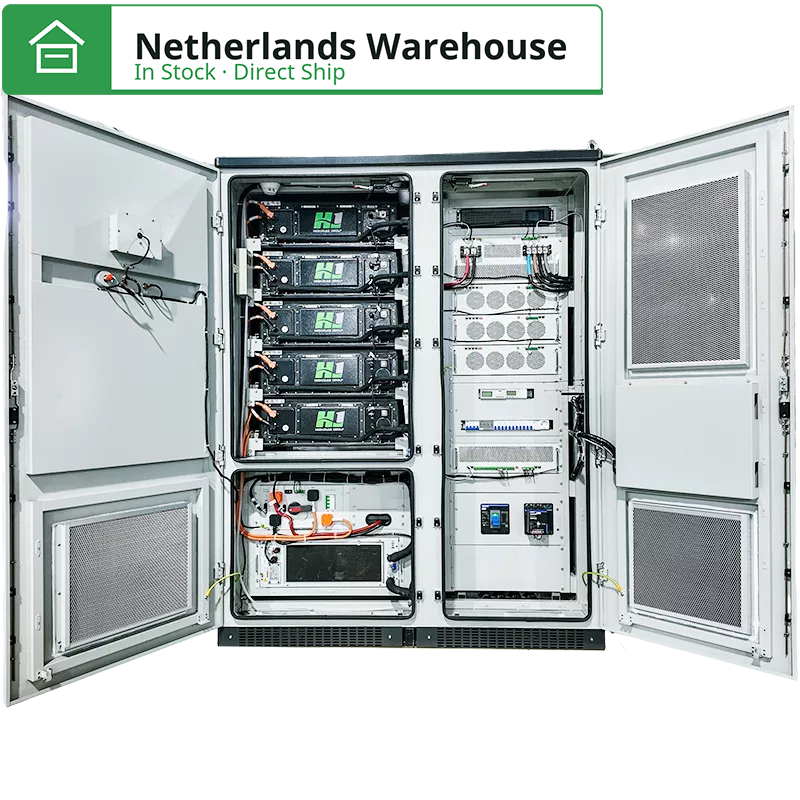
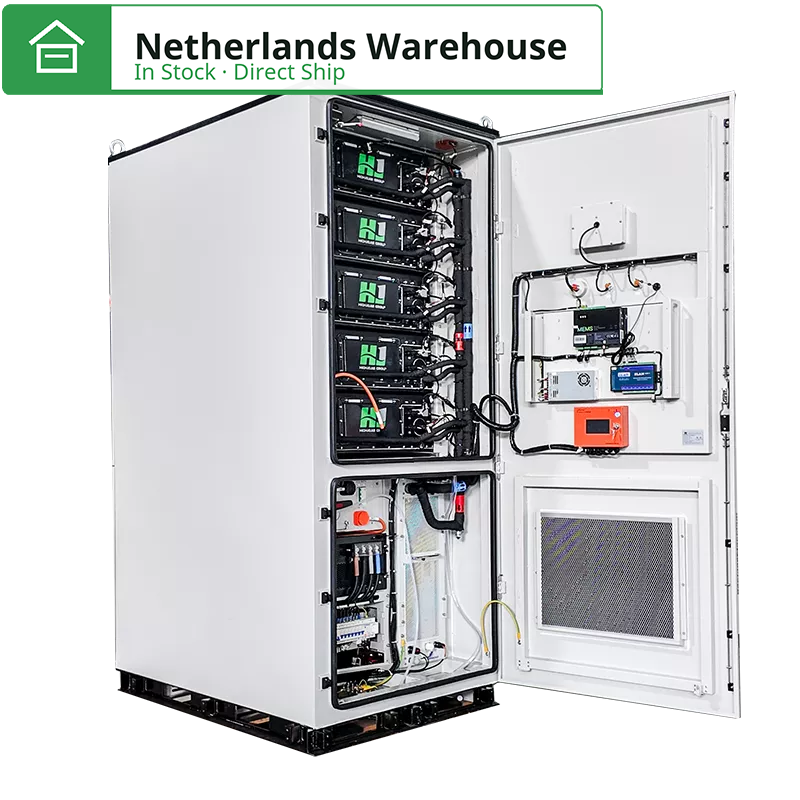
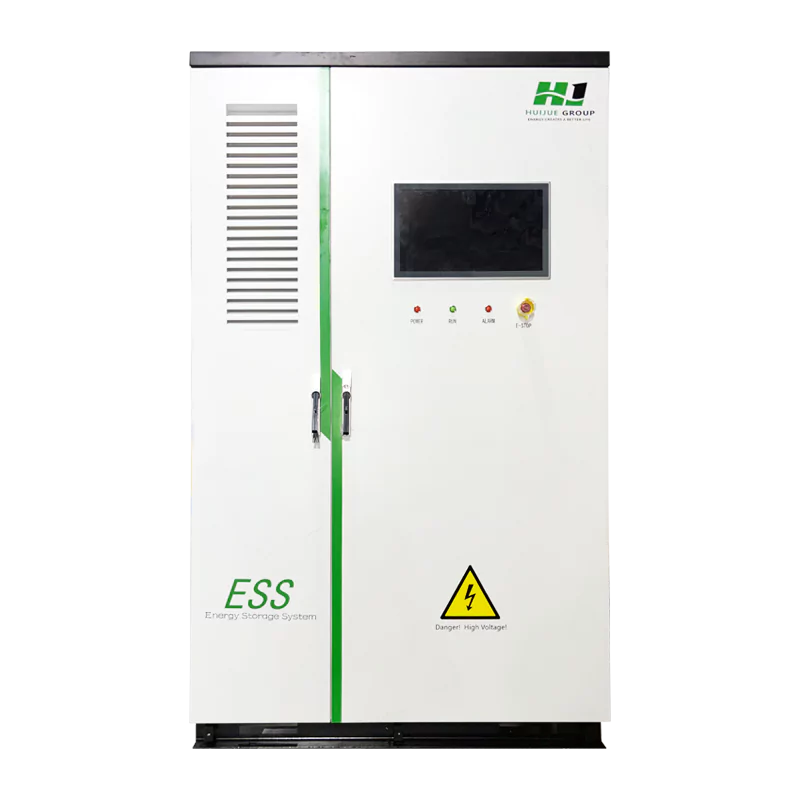
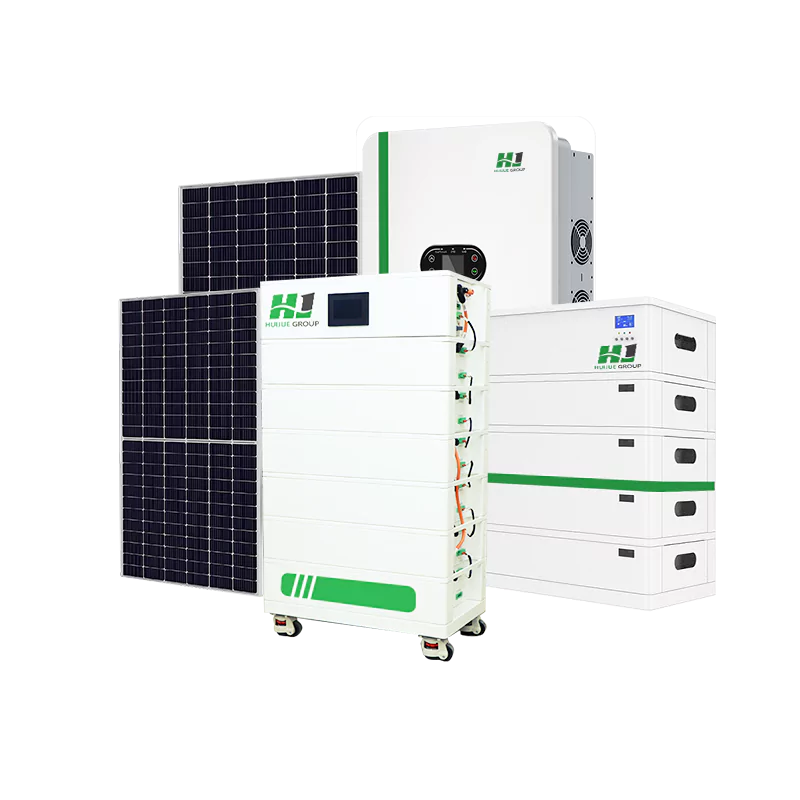
Huijue develops integrated telecom power solutions that combine supply, distribution, backup, protection and monitoring around the site’s operating requirements. Depending on the project, the architecture can include PV generation, MPPT control, lithium battery storage, nominal -48 V DC power, grid or generator input, environmental control and remote energy management.
The proposal should begin with evidence, not a predetermined cabinet size. Useful inputs are the coordinates, load profile, autonomy target, voltage window, grid and generator history, climate limits, available solar area, communications protocol and expected expansion. From there, the engineering team can compare architectures and identify which assumptions need field confirmation.
Ofte stilte spørsmål
Can a telecom tower run entirely on solar power?
Yes, where solar resource, unshaded area, storage capacity and load are compatible. A time-series model should still test the low-solar season and required recovery. Critical sites may retain a generator or another backup source for rare events.
How many solar panels does a cell tower need?
There is no dependable answer from tower type alone. Panel count depends on daily load, panel rating, design-month sunlight, temperature, shading, system losses, orientation and growth margin. Start with kWh per day, not a generic panel-per-tower rule.
Does a solar-powered telecom site always need an inverter?
No. Many telecom loads use nominal -48 V DC and can be supplied through a suitable DC architecture. An inverter is required for AC loads. Removing unnecessary conversion stages can reduce loss and simplify the power path.
How much battery autonomy is appropriate?
The operator should define autonomy from the service target, weather, source reliability and response time. A grid-assisted site may need hours, while a remote off-grid site may require much longer. Longer autonomy increases cost, footprint and recovery demand.
Can solar panels be mounted on the telecom tower?
They can in some engineered configurations, but the structure, wind loading, shading, cable routing, RF environment and maintenance access must be assessed. Ground mounting is often simpler when secure land is available.
What is your hardest site to power?
Send the load profile, coordinates, outage history and autonomy target through your established Huijue project contact. The first useful deliverable is not a product list; it is a transparent energy balance and architecture comparison.
光伏储能项目.webp)